Which allergen menu details should stay identical across every location of a restaurant group?
Groups with several locations often let each kitchen run its own allergen sheet. That flexibility is where guests get hurt. Here is what to standardize and what to leave local.
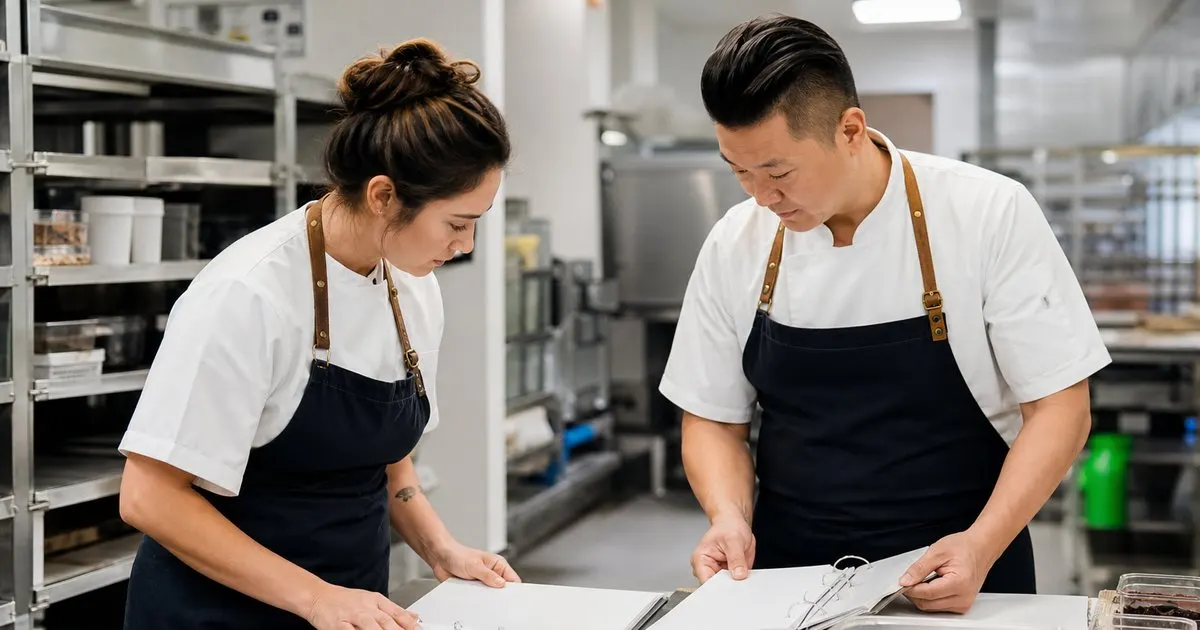
Where multi-location groups go wrong
Restaurant groups tend to start with one kitchen's allergen sheet, copy it to each new location, and let the locations evolve independently. One site switches bun suppliers to save on delivery minimums. Another adds a regional sauce. A third never received the update when the group changed its fryer oil. Within a year, a dish that carries the same name and photo at every location has three different allergen profiles, and the guest-facing menu, usually a single brand website, shows one of them. Related: Allergen Labeling Basics Every Restaurant Should Know
Guests do not trust locations; they trust the brand. A guest with a tree nut allergy who ate safely at your downtown location will order the same dish at the airport location without asking again. That is rational behavior based on the brand promise, and it means any local variation in an allergen-critical component is a hazard for the whole group, not a local quirk. The purpose of standardization is to make the promise true everywhere, or to make the exceptions visible where it is not.
Keep reading: Allergen Labeling Basics Every Restaurant Should Know, Why a Printed Allergen Card Goes Out of Date, Building a Menu That Is Safe and Appealing. See how MenuAegis helps you live allergen and nutrition menus with an auto-updating qr.
What must be identical across every location
Start with the framework. Every location tracks the same allergen list, all nine major allergens, in the same order, using the same template. Everyone uses the same definitions: what contains means, what may contain means, and when a dish may be described as free of an allergen. Dish names are identical for identical recipes; if a recipe differs, the name or a location flag differs too. The disclaimer wording, the server script for allergen questions, the ticket flag procedure, and the minimum training standard are written once and adopted everywhere.
Then standardize the inputs that matter most. Maintain a group-wide approved product list for allergen-critical purchases: buns, breads, dairy alternatives, sauces, dressings, oils, spice blends, and anything supporting an allergen-free claim. Locations buy from that list, and a substitution requires central approval or, at the very least, documentation before service. Finally, standardize the update procedure: who submits a change, who approves it, how fast it propagates, and where the version log lives. The procedure is what keeps the other standards from decaying.
What can stay local, with a rule attached
Not everything needs central control, and trying to control everything guarantees the system will be ignored. Produce sourcing is usually low risk and can stay local. Local specials are fine as long as each one has its own documented record, following the same card format used everywhere. Regional menu items belong to the location that runs them, but they get their own dish record and their own name, so they cannot be confused with a group-wide item. Related: Why a Printed Allergen Card Goes Out of Date
The rule for any local variation is simple: it must be documented before service and visible wherever guests see the menu. A location that runs a different bun needs a distinct record and a flag on that location's menu, not a silent swap. A live menu platform with location-level overrides handles this well: the group record is the default, the local exception is explicit, and the guest scanning the QR at that site sees the local truth. Without that, the group website becomes the least accurate menu the group owns. Related: Menu Updates Without Reprinting Everything
Running it centrally without becoming a bottleneck
Assign a single owner of the group matrix, typically a culinary director or an operations lead, with a named backup. Location managers submit changes through one channel, with the spec sheet attached, and the owner approves or rejects within a defined window so kitchens are not stuck waiting. Log every change with date, location, and reason. The log is what turns a scattered set of decisions into a record you can defend and learn from.
Audit across locations on a schedule. Once a quarter, order the same handful of allergen-critical dishes at every site and compare what arrives, and what the local menu says, against the group record. Differences are usually procedural, not malicious, and each one points to a step in the update path that needs tightening. Tools like MenuAegis let one dish record serve every site with explicit per-site exceptions, which removes most of the copying that causes drift, but the audit is still the check that proves the system works. Related: Building a Menu That Is Safe and Appealing
- Guests trust the brand, not the location, so any local variation in an allergen-critical component is a group-wide risk.
- Standardize the allergen list, definitions, template, dish names, disclaimer, server script, training minimum, and approved products for critical items.
- Allow local produce sourcing and local specials, but require a documented record and a visible flag for every local variant.
- Give the group matrix a named owner, a single change channel, a version log, and a quarterly cross-location audit.

Julien Jimenez
Julien Jimenez is an independent software builder based in Paris. He designs, ships, and operates focused SaaS products for small businesses and independent professionals. Read the full author page.
Allergen answers your staff can trust
Live allergen and nutrition menus with an auto-updating QR. MenuAegis is built to help you put this into practice.
Build your menuMore from the MenuAegis blog

Get the MenuAegis playbook
Practical guides on menu safety, straight to your inbox as we publish them. No spam, unsubscribe any time.