What is the best way to label allergens at a buffet or catered event?
Self-service removes the server from the conversation. Labels, layout, and serving utensils have to do the talking, and most of the failures come from the last hour of setup.
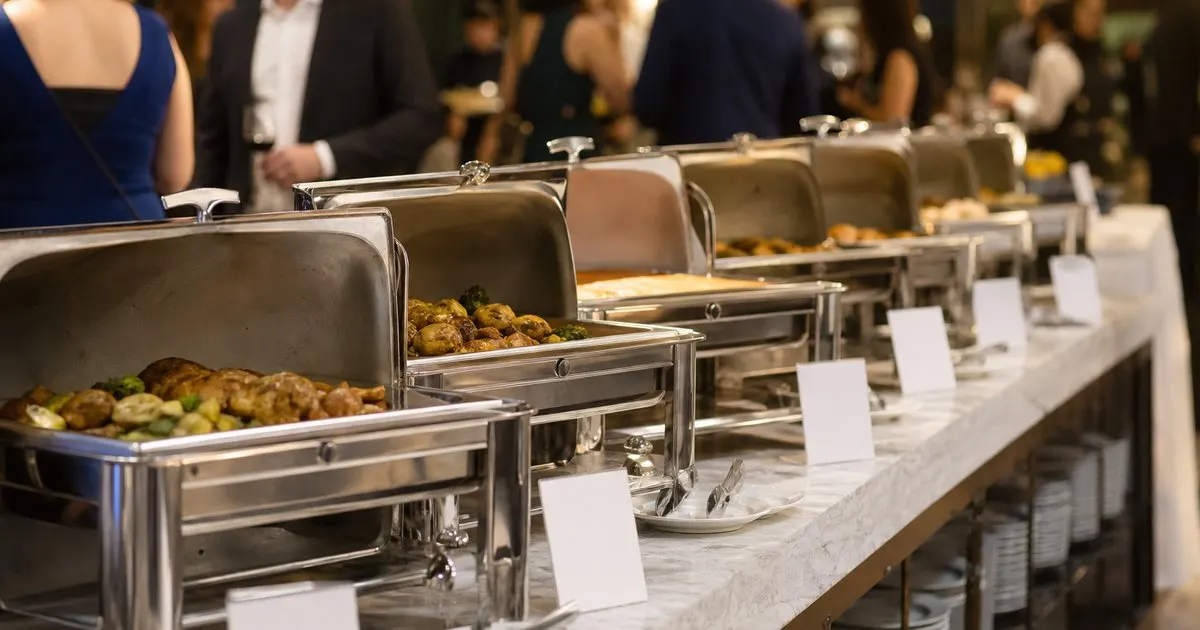
Why buffets fail differently than plated service
In plated service, a guest with an allergy talks to a server, the ticket is flagged, and the kitchen controls the plate from start to finish. A buffet removes every one of those steps. The guest reads a card, or does not, and serves themselves with a spoon that may have just been in the dish next door. Guests move dishes, swap utensils, and drip sauce across the line. The people who set the line are often event staff rather than the cooks who made the food, and the dishes are refilled from a second batch that may not match the first. Related: Cross Contamination: What Staff Need to Know
The failures cluster in the last hour before doors open. Cards get printed from an old menu, a dish is swapped because a pan broke, someone sets the tongs for the shrimp on the saucer for the chicken, and the person who could answer a question has gone back to the kitchen. None of these are exotic. They are the ordinary chaos of setup, and the plan has to assume they will happen.
Keep reading: Allergen Labeling Basics Every Restaurant Should Know, Why a Printed Allergen Card Goes Out of Date, Building a Menu That Is Safe and Appealing. See how MenuAegis helps you live allergen and nutrition menus with an auto-updating qr.
The label itself
Every dish gets its own card: the dish name and a contains line listing the major allergens present, in the same wording used on the main menu. Print large enough to read from arm's length, and use a weighted or clipped holder so the card stays with its dish when the table gets bumped. Place it directly in front of the dish, not between two dishes where it could be read as belonging to either. Consistency is more important than design; a guest scanning fifteen cards should be able to find the allergen line in the same spot every time. Related: Allergen Labeling Basics Every Restaurant Should Know
Print the cards from the same record that feeds your menu, not from memory or a fresh document, so the buffet and the menu never disagree. At the head of the line, add a single sign with the cross-contact note (dishes are prepared in a kitchen that handles all major allergens, and shared utensils on the line can transfer ingredients) and a QR code to the full allergen list. Guests who need detail beyond the contains line can find every component on their phone without tracking down a staff member. A live menu makes that QR current even when the dish list changes an hour before service. Related: Building a Menu That Is Safe and Appealing
Layout and utensil rules that prevent cross-contact
Put dishes that carry allergen-free claims at the beginning of the line, physically separated from the rest, so they are served before any utensil has touched something else. Every dish gets its own utensil with a dedicated rest, and rests should not overlap. If a utensil ends up in the wrong dish, the dish is treated as contaminated for allergen purposes and the card is pulled until the kitchen decides. Sneeze guards and spacing between chafing dishes reduce drips; so does not overfilling.
For guests who declare an allergy, do not rely on the line at all. Plate their meal in the kitchen from reserved portions that were never on the buffet, using the same allergy protocol as plated service, and bring it to them. This is standard practice in well-run catering and worth stating in the event contract or on the head-of-line sign, so guests know to ask. Refills follow the same discipline: the fresh pan is checked against the card before it goes out, because the second batch of a sauce is exactly where a substitution slips in.
The handoff between kitchen and event staff
Write a setup sheet for the event: every dish, its card, its allergens, its position on the line, and its utensil. The chef walks the finished line against the sheet before doors open and signs it. Any change after that point, a swapped dish or a missing item, gets a new card printed or handwritten and a note on the sheet, never a crossed-out card that leaves the old information visible. Name one person on the floor who can answer allergen questions and reach the kitchen, and make sure the event host knows who that is. Related: Why a Printed Allergen Card Goes Out of Date
Keep the signed setup sheet with the date after the event. Catering clients call back, guests call back, and a sheet that shows what was served and how it was labeled is the difference between a clear answer and a shrug. Over time the sheets also reveal which dishes repeatedly cause label problems, which is useful when planning the next menu. For operators using MenuAegis, an event menu can be set up as its own dated menu with the same records as the restaurant, so the cards and the QR come from one source.
- Buffets remove the server, the ticket flag, and kitchen control of the plate, so labels and layout must carry the allergen information alone.
- Give every dish a weighted card with a consistent contains line printed from the menu record, plus a cross-contact sign and a QR at the head of the line.
- Separate allergen-free dishes, assign one utensil per dish, and plate declared-allergy guests in the kitchen from reserved portions.
- Use a signed setup sheet, replace rather than cross out cards after any swap, and keep the sheet on file after the event.

Julien Jimenez
Julien Jimenez is an independent software builder based in Paris. He designs, ships, and operates focused SaaS products for small businesses and independent professionals. Read the full author page.
Allergen answers your staff can trust
Live allergen and nutrition menus with an auto-updating QR. MenuAegis is built to help you put this into practice.
Build your menuMore from the MenuAegis blog


Get the MenuAegis playbook
Practical guides on menu safety, straight to your inbox as we publish them. No spam, unsubscribe any time.